Facing a dynamic and constantly changing market environment is a major challenge for companies. In this context, we often read about the need for an agile organization that can adapt quickly to new conditions. This raises the question of what an agile organization is, why it is a success factor and how the transformation to an agile organization can succeed.
Agile organization - definition
In order to classify the term agile organization, it is important to understand the general meaning of agility. Agility is a principle that originates from software development. Agility describes the ability to react quickly and flexibly to changing conditions. If this ability is applied to an organization, then it is characterized by the ability to react quickly to changes in the market.
These factors characterize an agile organization
To achieve this, agile organizations rely on self-organization, flexibility and customer orientation. Rigid hierarchies and strictly defined processes are broken down and replaced by flat structures with iterative working methods. Above all, the focus is on the personal responsibility of individuals and teams. In the following, we take a closer look at the significance of the individual factors.
The agile mindset
It all starts with an inner attitude. In agile organizations, all team members share a common understanding of the company's vision. The right mindset is crucial to enable personal responsibility. If everyone understands their own purpose in the company, they can contribute to achieving the company's goals.
Interdisciplinary teams
A team consists of team members from different areas. This ensures that processes can be handled holistically by one team. The team members work closely together to develop solutions for customers quickly and efficiently.
Breaking down rigid hierarchies
Flat structures and thus the dissolution of strict hierarchies is a key factor on the way to an agile organization. Long decision-making paths due to strictly defined competencies hinder the development of a company. The same applies to rigid reporting lines.
The advantages of an agile organization
The agile form of organization has cross-divisional advantages. These offer extensive opportunities and possibilities for organizations.
Flexibility and adaptability
The past few years have shown that organizations are constantly confronted with new circumstances. Current and past crises have a major impact on the way we live and work. Companies that are able to adapt quickly to new circumstances have a greater chance of success in a dynamic environment.
Efficiency and productivity
Flat structures and a high level of personal responsibility eliminate long coordination and decision-making processes. An agile organization is more efficient and productive, as less time is spent on internal coordination. This newly gained freedom can be used to optimize customer focus or to work on individual development. Agile organizations are characterized, for example, by the fact that employees do not rush from one meeting to another, but can carry out longer phases of work undisturbed.
Minimization of risks
Agile organizations require a way of working that makes it possible to test innovations in a small environment. This often involves working with prototypes and obtaining feedback from employees, users and other market participants at an early stage. This way of working means that extensive information is available even before major costs are incurred.
Better cooperation
In agile organizations, all team members benefit from working together as equals. Feedback is given much more honestly in flat structures. Ultimately, this also leads to the creation of a pleasant corporate culture.
Customer centricity
Customers also benefit from an agile organizational structure. Agile teams are used to putting customers at the center of everything they do. As part of their actions, they always ask themselves what customers get out of a particular measure. This way of thinking means that agile organizations often achieve higher customer satisfaction and focus on relevant parts of value creation.
4 steps to more agility
The possibilities and opportunities of agile organizational structures are clear. Nevertheless, many companies face a major challenge in the transition to an agile organization.
Step 1: Analyze the initial situation
The first step is to analyze the initial situation. Organizations or their managers need to know exactly what the current situation in the company is. These questions serve as guidelines:
- What processes exist in the company?
- What structures are anchored in the organization?
- What hierarchies are there?
- What is the corporate culture in the organization?
This step forms the basis for the change process towards an agile organization. Decision-makers and managers should already be aware here that many structures will be broken up in the transition to an agile organization.
Step 2: Define target image
Although agile organizations all follow similar factors, the design and application of these factors varies greatly from company to company. For this reason, it is important to derive a target image. Questions can also help here:
- What is the vision and what is the organization's purpose?
- Which teams should take on which tasks?
- How do we ensure that all team members can work independently?
- Which roles or areas of responsibility should change?
Answering these questions is not that easy. For this reason, as many perspectives as possible should be included. Agile methods, such as holding workshops, can help in the development of such a target image.
Step 3: Derive and implement measures
There is certainly still a discrepancy between the current situation and the target picture that has been drawn up. In order to fill this gap, suitable measures must now be derived in the third step. Such measures include, for example
- Introduction of agile methods such as Kanban: tasks are structured on a Kanban board and processed one after the other. This creates continuity and increased transparency.
- Promote continuous learning: In an agile organization, the continuous learning of team members plays an important role. In addition, an agile organization also places new demands on team members, making it necessary to promote new skills.
- The development of agile managers: Managers in agile organizations are not responsible for control. Instead, they work to enable their employees to carry out their work independently.
Step 4: Accompanying change management
The change from a traditional to an agile organization requires courage and takes time. To ensure that this change does not lead to excessive demands, it should be accompanied by targeted and professional change management.
Conclusion: Agile organizations are more productive
The more dynamic the market environment, the more agility is required of companies. But it is not only external pressure that is leading more and more organizations to focus on agility. Increasing productivity is also leading to growing popularity. It therefore makes sense for companies to make use of agile methods in order to gain a competitive edge.
The motivation, willingness to perform and loyalty of managers and employees play a key role in determining whether the path to an agile organization can be successfully mastered. Successful organizations consistently use employee surveys and 360 management feedback as a dialogue tool, which has a positive effect on commitment and the company's success. We would also be happy to advise you personally on 044 786 32 52.
Article published on March 6, 2023
About Barbara Haimoff

Barbara Haimhoff is Office Manager at ValueQuest and ensures that day-to-day business runs smoothly. She graduated from the KV Baden business school and is a qualified commercial clerk with many years of professional experience in administration and organization. Find out more about Barbara
Inspired? Then share this post via your favorite platform.
Other articles that might interest you ...

AI in the Swiss Insurance Market: What Insurers Can Learn from the Results
October 1, 2026
Reading time: 4 min
Artificial intelligence is not universally accepted in the Swiss insurance market. As a study by ValueQuest shows, customers’ openness to AI depends heavily on how it is used.

AI in the Swiss Insurance Market: Between Acceptance and Skepticism
September 28, 2026
Reading time: 5 min
For many Swiss people, artificial intelligence has become an integral part of everyday life. However, the situation is different when it comes to insurance companies.

Top Employer: Raiffeisenbank Glarnerland Impresses with Strong Leadership
September 21, 2026
Reading time: 2 min
ValueQuest recently had the honor of presenting the “Excellence@Work Award” to Raiffeisenbank Glarnerland. We extend our heartfelt congratulations.
Top Swiss Employers: GastroSocial
September 9, 2026
Reading time: 3 min
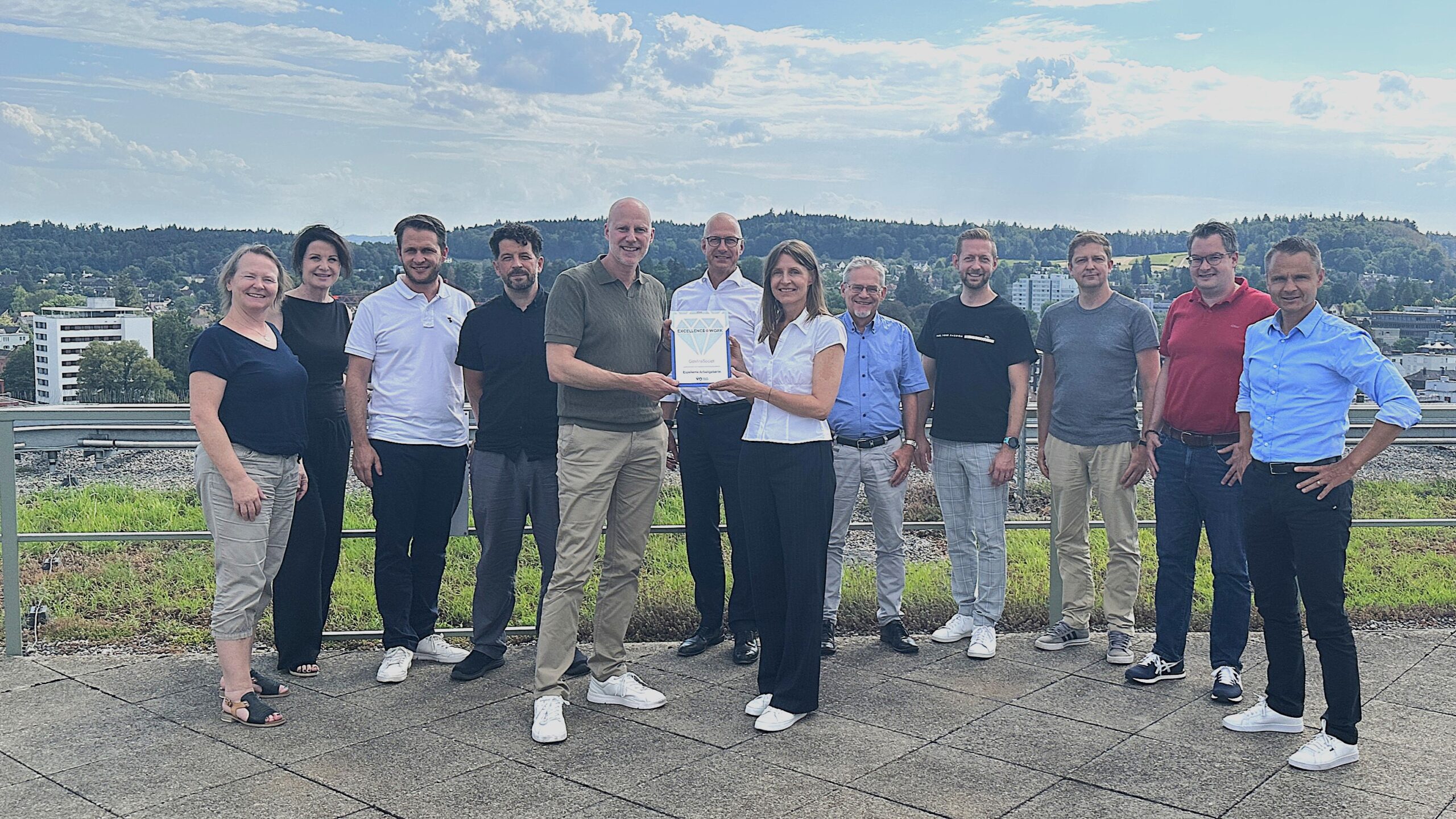
GastroSocial has received the 2026 Excellence@Work Award from ValueQuest. With a response rate of 96 percent, a motivation score of 84, and 87 percent of employees serving as brand ambassadors, the company demonstrates a strong employer culture.

Employee Survey: Raiffeisenbank Möhlin Achieves Excellent Results
August 31, 2026
Reading time: 3 min
Raiffeisenbank Möhlin is one of Switzerland's top employers and is receiving our Excellence@Work Award in recognition of this achievement. Congratulations!

Employee Surveys in Switzerland: Find Providers & Tools
August 30, 2026
Reading time: 6 min
Employee Survey in Switzerland: How Do You Find the Right Employee Survey Provider? What Really Matters When It Comes to Anonymity, Tools, Questionnaires, and Analysis.

360-Degree Feedback Questionnaire: Sample, Template, and Sample Questions
August 21, 2026
Reading time: 7 min
Table of Contents A 360-degree feedback process is only as good as its questionnaire. The questionnaire is at the heart of the entire process. It determines whether...

Employee Survey: The CAMPUS SURSEE Foundation Is Among Switzerland's Best Employers
August 5, 2026
Reading time: 2 min
ValueQuest honors particularly attractive employers in Switzerland with the Excellence@Work Award. We recently had the pleasure of presenting the award to the CAMPUS SURSEE Foundation.
Raiffeisenbank Regio Arbon, a Top Employer: Personal Responsibility as Part of a Strong Corporate Culture
July 7, 2026
Reading time: 2 min
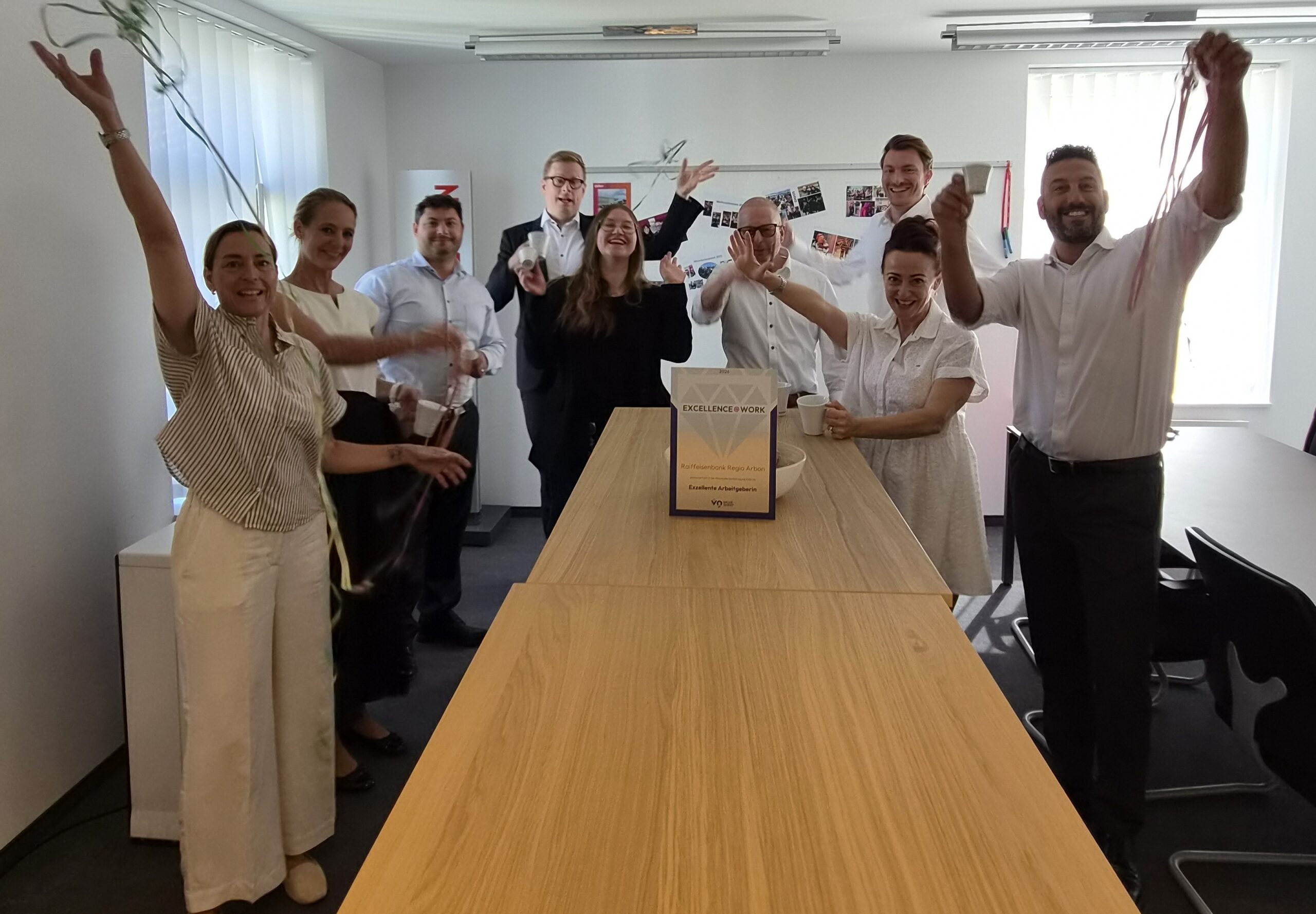
ValueQuest honors particularly attractive employers in Switzerland with the Excellence@Work Award. We recently had the pleasure of presenting the award to Raiffeisenbank Regio Arbon.