Discriminative AI models that focus on classifying and analyzing data have long been established in research and practical applications. This also applies to HR and talent management. Generative AI models, on the other hand, which can generate new content, have made greater progress in recent years, particularly through developments in the areas of machine learning and neural networks. An overview.
By Dr. oec. HSG Kathrin Neumüller and Thomas Bigliel, digitalization expert and former member of the Grisons cantonal parliament
Even though "artificial intelligence" (AI) has experienced a veritable gold rush since the launch of ChatGPT, probably the best-known AI application, in 2022, the use of artificial intelligence in the world of work is nothing new. The use of AI has also been widespread practice for years in HR and talent management, which is concerned with acquiring new talent and promoting the skills of the existing workforce. Thanks to the use of AI, large volumes of applications can be efficiently reduced to a manageable and manageable number. Whereas this pre-selection was previously carried out by humans, many companies now automatically search through incoming applications for suitable keywords. These algorithmic recommendation systems identify suitable applicants by analyzing their education, skills and experience to determine whether they are relevant for the role in question. This type of AI, which aims to differentiate between classes and categories, is known as discriminative AI . It classifies applicants as "suitable" or "not suitable" by screening CVs or assessing aptitude tests.
The novelty of generative AI
While discriminative AI applications have been used in various industries for some time, so-called generative AI models are opening up new fields of application that go beyond pure data analysis and classification. In addition to analyzing and classifying data, generative AI models are also able to generate new content in the form of texts, tables, images and other media formats, which opens up a wide range of potential applications. Some of the potential use cases include, for example, the generation of job advertisements or automated communication with applicants. Tailored content and specific queries can be generated based on potential candidates' profiles, helping to make the recruitment process more efficient and targeted. AI-generated employment contracts that are specifically tailored to the requirements and agreements of a particular position are also theoretically conceivable. However, this is associated with certain restrictions in terms of legal certainty. In general, when using discriminative and generative AI, care must be taken to ensure that it is used in a responsible and legally compliant manner. Ethical considerations will also play an increasingly important role here. One thing is certain: The use of generative AI models in HR processes promises a significant increase in efficiency and effectiveness.
How are ChatGPT & Co changing talent management in organizations?
It is foreseeable that providers of application management software and e-recruiting tools will increasingly rely on AI elements in the future. While larger companies have tended to use AI-supported systems for the automated screening of applicants in the past, SMEs will also have easier access to powerful tools for the pre-selection and automated assessment of applicants in the future.
Freely accessible AI systems, such as ChatGPT, can be used to assess the suitability of applicants for a job. By analyzing and comparing job descriptions with hundreds of CVs, the AI can identify relevant qualifications, experience and skills and make an initial recommendation. This process enables an objective, data-driven assessment that saves time and can even reduce potential bias. Such systems can help recruiters to quickly identify the most suitable candidates, potentially making the recruitment process more efficient and effective. Here's an example. By inserting a job advertisement as continuous text into the input mask of ChatGPT (version 4.0) and uploading the CVs of the applicants, it is possible to make a qualified, AI-supported initial selection with ChatGPT. A possible prompt at this point is, for example, "Screen the following CVs with regard to the following position and compare the applicants based on their suitability for the job advertisement. Create a tabular comparison of the best five profiles". Try it out for yourself using fictitious data - the result is astonishing. Generative AI is therefore able to screen and process hundreds of CVs within seconds. Please note that when using AI systems, especially when evaluating CVs and other personal data, the confidentiality and data protection of applicants must be guaranteed. Before using AI systems, familiarize yourself with the terms of use and general terms and conditions (GTC) of the respective provider and observe both legal and internal company requirements and regulations.
Out of 1000 candidates, 5 become
However, the use of artificial intelligence is only recommended if existing analog processes are already efficient, value-adding, strategy-compliant, legally compliant and non-discriminatory (Groß, 2023). (Generative) AI can only automate processes and thus increase the efficiency of processes, but not improve their effectiveness. If, for example, HR processes are not coherently aligned with the strategy and are therefore not looking for applicants who contribute to the future viability of the company, the use of AI may reinforce a strategic misalignment. A frequently cited example of the risks of AI in talent management is the case of the American online retailer Amazon, which developed an AI-controlled application assistant in 2014. This discriminated against women and people with darker skin color, which led to discrimination even being reinforced and the application assistant no longer being used. In this case, the company's internal AI learned from historical company data and was trained to favor white male applicants over others. AI systems are therefore neither good nor bad, but rather reflect existing systemic biases and prejudices and can even reinforce them (Groß 2023). When using AI in HR management, it is therefore crucial to check whether it meets ethical, legal and corporate cultural requirements.
Generative AI can automate repetitive and time-consuming tasks in HR, such as creating job advertisements, sorting CVs, making an initial selection of suitable CVs for jobs or replying to interviews. By streamlining these operational tasks, the job profile of talent managers is shifting away from executive tasks towards critical reflection skills and strategic thinking. The goal will be to find strategically "right" employees who secure the company's strategic competitive advantage and demonstrate future-oriented thinking and action. Talent managers must therefore focus more than ever on the effectiveness (doing the right things) of their actions instead of focusing on efficiency (speeding things up).
The limits of artificial intelligence
So while generative AI is able to screen and process hundreds of CVs within seconds, this AI-supported approach means that the initial human assessment is lost. This lack of human assessment can prove problematic when it comes to evaluating applicant skills that are difficult to compare and quantify. For example, would you prefer a candidate who is willing and able to learn and who reflects your company's values but only matches your job profile by 75%, or a candidate whose qualifications match the job profile but who reflects far fewer of your company's values? Generative AI has (so far) reached its limits when it comes to assessing the match between personal values and company values or social and emotional skills.
"What Orwell feared were those who would ban books. What Huxley feared was that there would be no reason to ban a book, because there would be no one who wanted to read one."
In his 1985 book "Amusing Ourselves to Death", US media scientist Neil Postman warned that our society was heading towards a 'post-factual age' in the face of technological change. "What Orwell feared were those who would ban books. What Huxley feared was that there would be no reason to ban a book, because there would be no one who wanted to read one." Almost four decades later, in the age of artificial intelligence, Postman's warning is more relevant than ever. Which candidate is authentic? Which candidate may have had some help with her CV? Is a real person even applying for the advertised position? Even AI can only help to a limited extent in this arms race.
A technological vicious circle arises when job advertisements are generated with AI and applicants also outsource the writing of their application documents to the AI. Based on the job advertisement generated by the AI, a CV and cover letter are generated that use specific buzzwords from the job advertisement to serve the AI algorithms. We then find ourselves in a "battlefield of buzzwords", because applicants no longer write their documents for a human counterpart, but for machines. Relevant keywords are strategically placed for the technological counterpart in order to increase the chances of being invited to an interview.
Conclusion
In the future, companies will not only be confronted with efficiency gains through AI, but also with all kinds of legal pitfalls and stumbling blocks. For example, it is possible and not unlikely that an AI system will systematically disadvantage and automatically exclude certain applicants based on certain characteristics. In theory, software providers already ensure that no discriminatory patterns can arise when creating algorithms, but this cannot be ruled out. HR experts should be aware of this problem and carry out regular test runs with their own system. Finally, data protection aspects should not be neglected either. For example, the Data Protection Act (DSG), which came into force on September 1, 2023, in particular Art. 21 DSG, regulates the limits of automated evaluations - and thus also of AI-supported personnel searches.
The integration of AI in HR management, particularly through generative systems, has the potential to fundamentally revolutionize the efficiency of recruitment processes. However, the successful use of AI depends on the quality and fairness of the underlying processes. AI can reflect or even reinforce existing biases if it is based on distorted data. Talent managers are therefore faced with the challenge of prioritizing effectiveness and ethical standards when leveraging the potential of AI.
| Dr. oec. HSG Kathrin Neumüller is an expert in the field of employee empowerment, employee inspiration and purpose and project manager at the Swiss market research institute ValueQuesta leader in employee surveys, customer surveys and management feedback. Ms. Neumüller lectures part-time in the MAS Business Administration at the Zurich University of Applied Sciences (ZHAW). She is a keynote speaker and author of specialist books on the topics of leadership, marketing technologies and employee inspiration. She also has many years of experience in strategic management consulting.
Thomas Bigliel is a product manager and digitalization expert. Bigliel founded and managed several start-ups. He is a winner of the prestigious Grimme Online Award and author of specialist books on the subject of digitalization. He is affiliated with the Lucerne University of Applied Sciences and Arts (HSLU), where he specializes in human-computer interaction design. Bigliel is also a former member of the cantonal parliament of Graubünden. |
Bibliography:
Groß, M. (2023). Artificial intelligence in personnel management - Gold rush in the field of tension between optimistic software providers and skeptical personnel managers. In AI for the good (pp. 203-239). Springer International Publishing. http://dx.doi.org/10.1007/978-3-031-22777-6_10
Postman, N. (2005). Amusing ourselves to death: Public discourse in the age of show business. Penguin.
Article published on April 14, 2025
About Dr. Kathrin Neumüller

Dr. oec. HSG Kathrin Neumüller is Co-Managing Director at ValueQuest and an expert in employee inspiration and empowerment. She also teaches strategic management in the MBA program at the ZHAW. She holds a doctorate from the University of St. Gallen (HSG) and studied at the University of Cambridge. Learn more about Kathrin
Inspired? Then share this post via your favorite platform.
Other articles that might interest you ...

AI in the Swiss Insurance Market: What Insurers Can Learn from the Results
October 1, 2026
Reading time: 4 min
Artificial intelligence is not universally accepted in the Swiss insurance market. As a study by ValueQuest shows, customers’ openness to AI depends heavily on how it is used.

AI in the Swiss Insurance Market: Between Acceptance and Skepticism
September 28, 2026
Reading time: 5 min
For many Swiss people, artificial intelligence has become an integral part of everyday life. However, the situation is different when it comes to insurance companies.
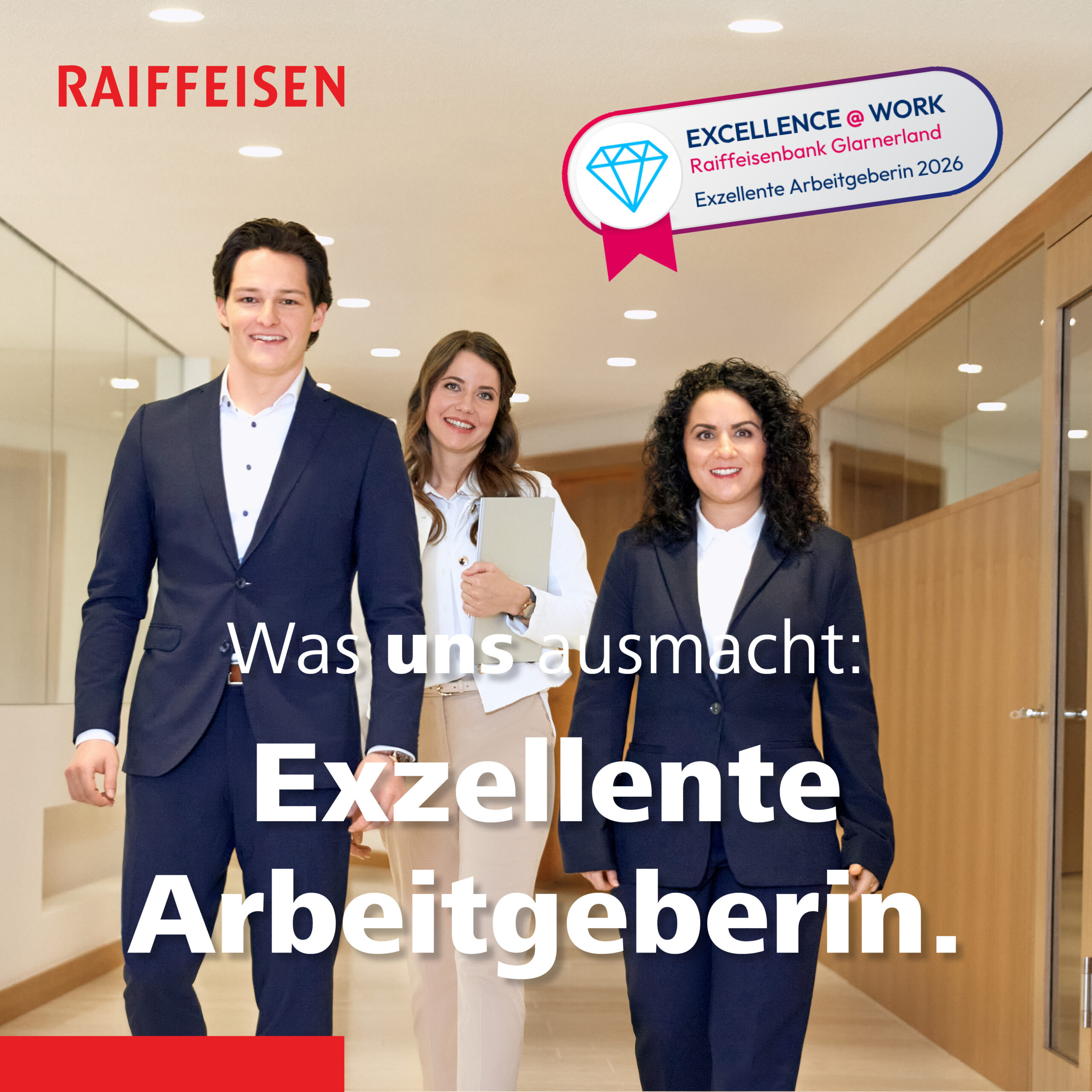
Top Employer: Raiffeisenbank Glarnerland Impresses with Strong Leadership
September 21, 2026
Reading time: 2 min
ValueQuest recently had the honor of presenting the “Excellence@Work Award” to Raiffeisenbank Glarnerland. We extend our heartfelt congratulations.
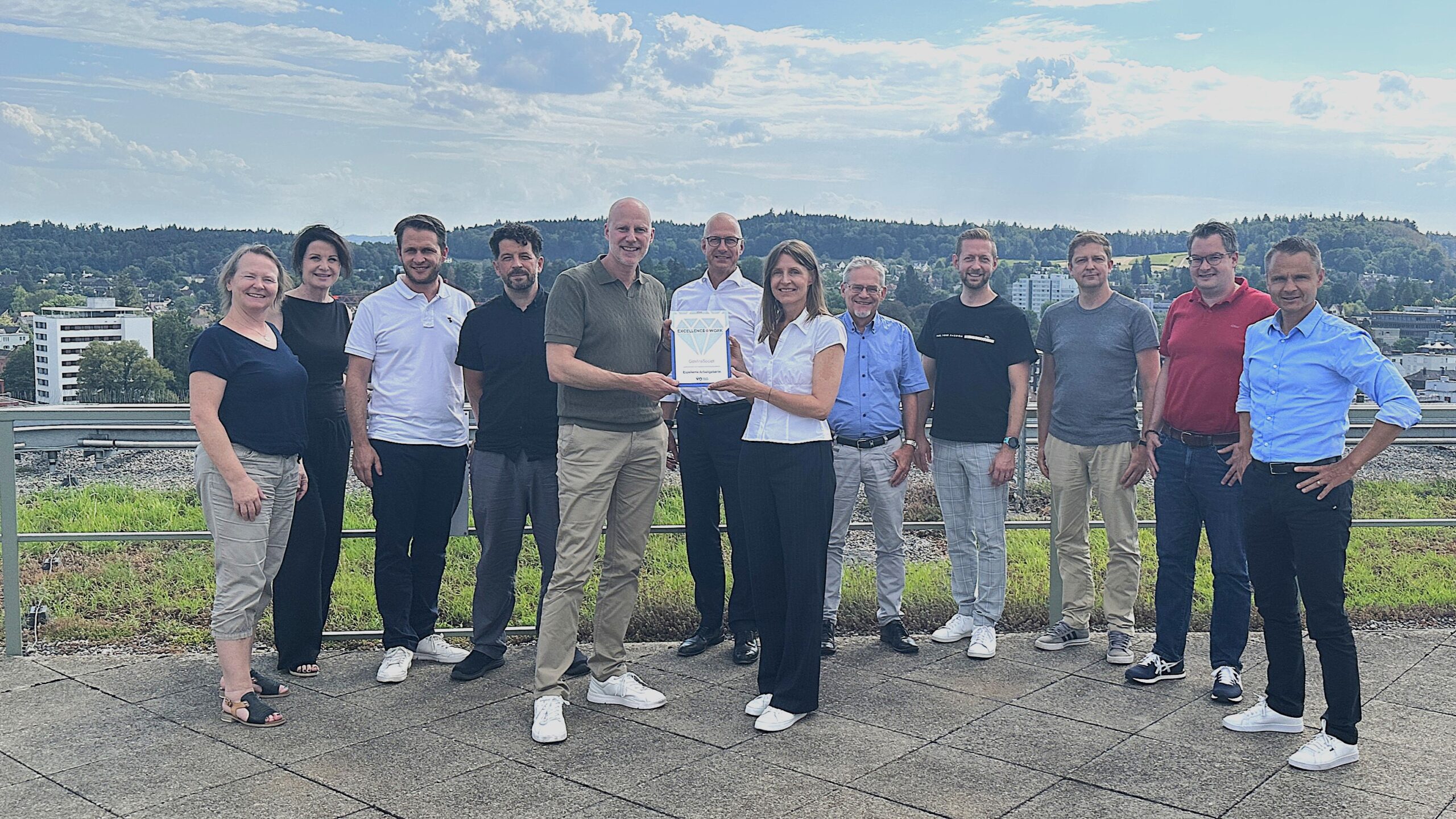
Top Swiss Employers: GastroSocial
September 9, 2026
Reading time: 3 min
GastroSocial has received the 2026 Excellence@Work Award from ValueQuest. With a response rate of 96 percent, a motivation score of 84, and 87 percent of employees serving as brand ambassadors, the company demonstrates a strong employer culture.

Employee Survey: Raiffeisenbank Möhlin Achieves Excellent Results
August 31, 2026
Reading time: 3 min
Raiffeisenbank Möhlin is one of Switzerland's top employers and is receiving our Excellence@Work Award in recognition of this achievement. Congratulations!

Employee Surveys in Switzerland: Find Providers & Tools
August 30, 2026
Reading time: 6 min
Employee Survey in Switzerland: How Do You Find the Right Employee Survey Provider? What Really Matters When It Comes to Anonymity, Tools, Questionnaires, and Analysis.

360-Degree Feedback Questionnaire: Sample, Template, and Sample Questions
August 21, 2026
Reading time: 7 min
Table of Contents A 360-degree feedback process is only as good as its questionnaire. The questionnaire is at the heart of the entire process. It determines whether...

Employee Survey: The CAMPUS SURSEE Foundation Is Among Switzerland's Best Employers
August 5, 2026
Reading time: 2 min
ValueQuest honors particularly attractive employers in Switzerland with the Excellence@Work Award. We recently had the pleasure of presenting the award to the CAMPUS SURSEE Foundation.
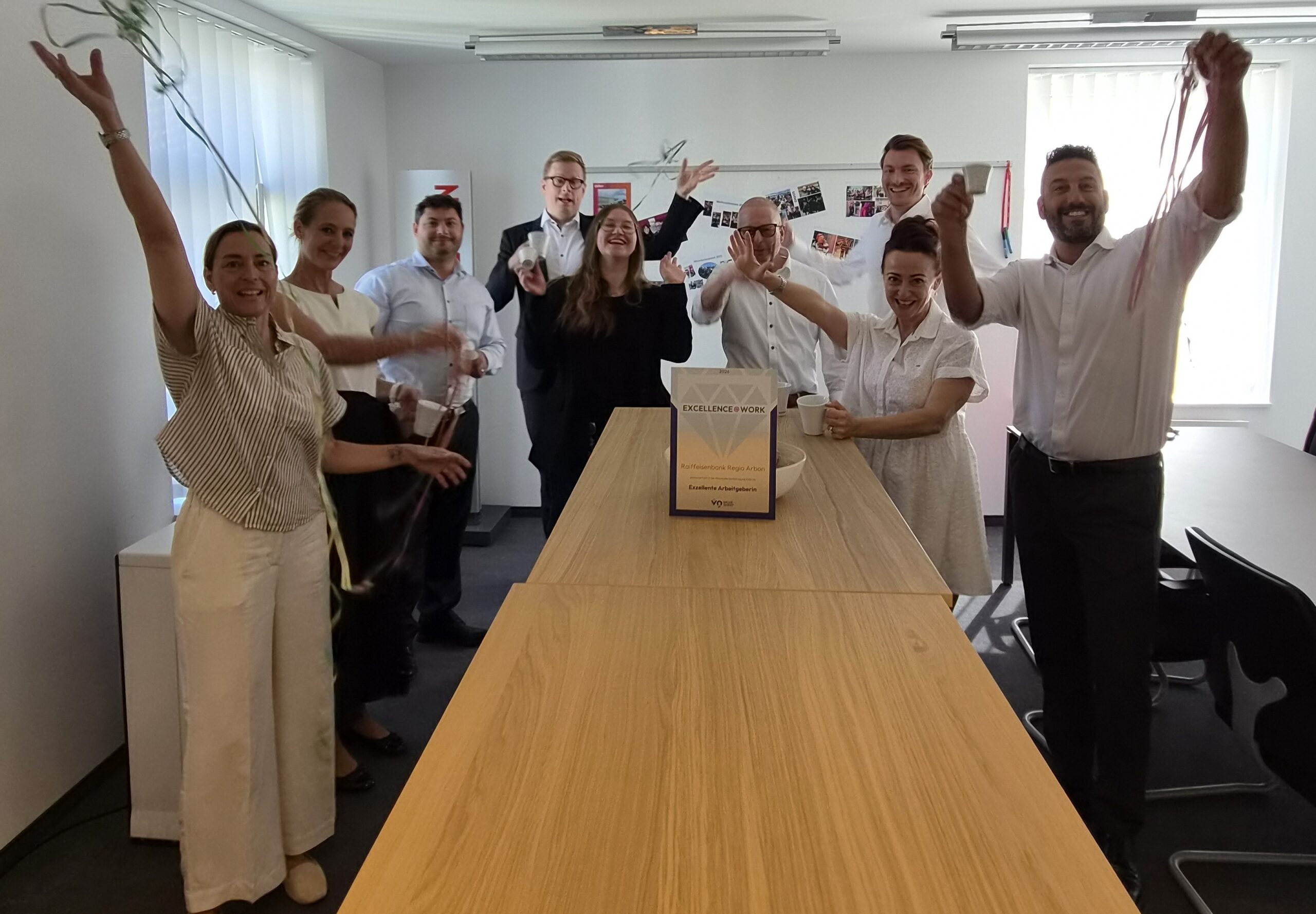
Raiffeisenbank Regio Arbon, a Top Employer: Personal Responsibility as Part of a Strong Corporate Culture
July 7, 2026
Reading time: 2 min
ValueQuest honors particularly attractive employers in Switzerland with the Excellence@Work Award. We recently had the pleasure of presenting the award to Raiffeisenbank Regio Arbon.